
$85 Million Bet on Web3 Dining: How Blackbird is Using Blockchain to Reinvent the Trillion-Dollar Loyalty Market?

Original Article Title: "With Total Funding of $85 Million, What is the Web3 Project Blackbird Aiming for in the Restaurant Industry?"
Original Article Author: Zen, PANews
Recently, the Web3 restaurant loyalty and payment platform Blackbird announced that it had successfully raised $50 million in its Series B funding round. Against the backdrop of a prolonged downturn in the primary market, this substantial funding undoubtedly demonstrates the crypto industry's expectation for the large-scale implementation of consumer applications, and reflects the confidence of many top crypto investment institutions in the project's prospects.
In the traditional restaurant market, high intermediary commissions and various service fees have become a burden that many small and medium-sized restaurants find difficult to bear, prompting the industry to urgently seek new solutions. At the same time, the cryptocurrency field urgently needs consumer-facing products and practical use cases. It seems that these two areas, each facing challenges, may have an opportunity to address each other's weaknesses through deep integration.
So, what exactly is Blackbird doing based on blockchain and cryptocurrency technology, and what is its potential?
Raised $85 Million in Funding, Targeting the Large Consumer Market of the Restaurant Industry
The Web3 restaurant loyalty and payment platform Blackbird, founded by Ben Leventhal, is positioned as a loyalty and payment solution for the restaurant industry. Leventhal has over 20 years of experience in the food and technology industry—back in 2005, he co-founded the food information website Eater, initially focused on the dining and nightlife scene in New York City, and was later acquired by digital media company Vox Media in 2013; in 2014, Leventhal co-founded the restaurant online reservation platform Resy with others, which was acquired by American Express in 2019.

Blackbird Founder Ben Leventhal
After years of deep cultivation in the restaurant industry, Leventhal gradually realized the limitations of traditional loyalty and reservation systems. Although they can bring short-term traffic, they cannot truly establish a "deeply interconnected" long-term relationship between restaurants and diners. Leventhal believes that for the restaurant industry to achieve this goal and ensure economic sustainability, restaurants must retain more commercial value and build a reward and loyalty ecosystem. This is the origin of Blackbird and the problem the platform aims to solve.
Food is a basic necessity for people. With a trillion-dollar scale, the food and beverage economy is the most fundamental and largest consumption sector, making it an ideal "testing ground" for the widespread adoption of cryptocurrency in the industry. Therefore, aiming to break through from the consumer application end and based on blockchain and cryptocurrency technology, Blackbird has also been highly anticipated and favored by the crypto venture capital industry. According to public information, since its establishment in 2022, Blackbird has raised approximately $85 million:
In October 2022, Blackbird announced the completion of an $11 million seed round of financing, led by Union Square Ventures, Shine Capital, and Multicoin Capital;
In October 2023, Blackbird announced the completion of a $24 million Series A round of financing, led by a16z Crypto, with participation from QED, Union Square Ventures, Shine, Variant, and several restaurant groups;
In April 2025, Blackbird announced the completion of a $50 million Series B round of financing, led by Spark Capital, with participation from Coinbase, a16z Crypto, among others. Leventhal stated that this funding was raised in Q4 2024 and refused to disclose the implied valuation of this round of financing.
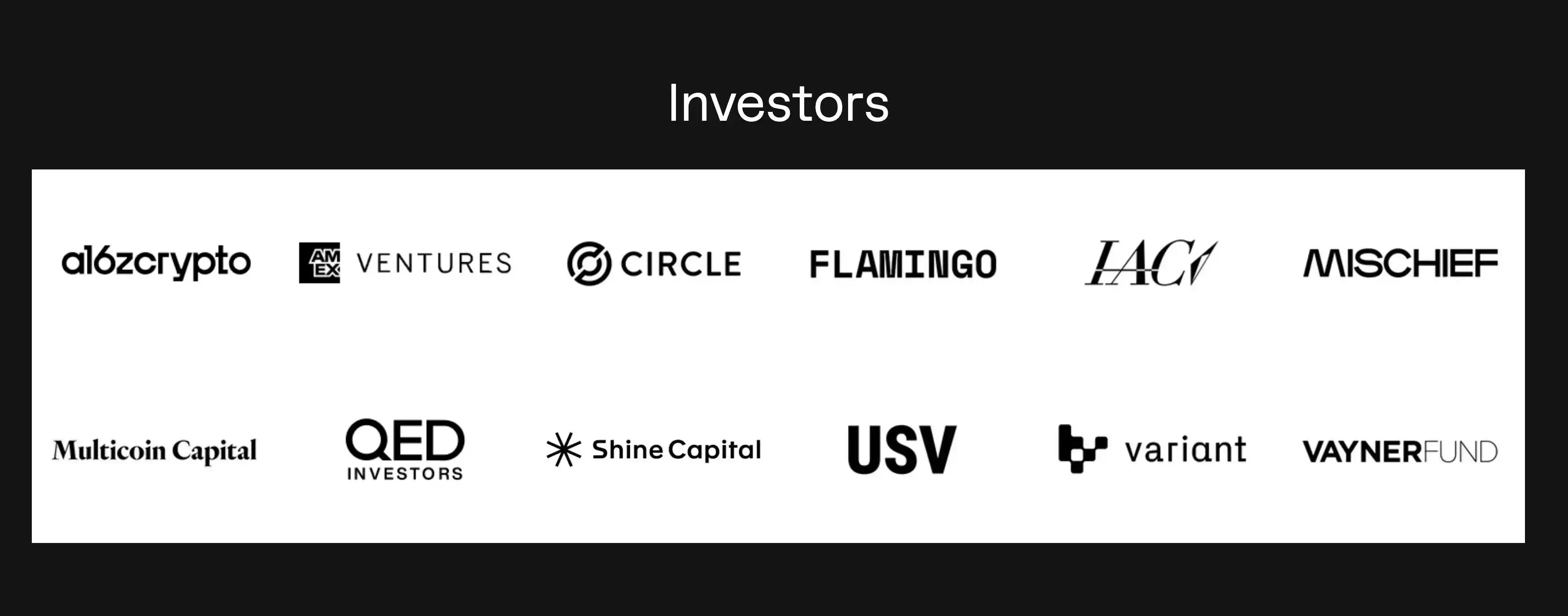
Blackbird Investor Lineup
Arianna Simpson, a general partner at a16z, believes that the restaurant industry is made up of millions of local small business owners worldwide, and these restaurants are completely at the mercy of tech platforms. These platforms can extract a large commission from the restaurant's profits, and this percentage is often increasing. This is where blockchain can play a role in improving the profit structure. She said, "Ben Leventhal's vision is to build a network owned by restaurants and diners themselves, which can only be achieved through blockchain."
Building Flynet Mainnet: Decentralized, Low-Cost, Tailored for the Restaurant Industry
One of Blackbird's main goals is to eliminate unnecessary intermediaries, including payment processors and other service providers between restaurants and customers. Leventhal estimates that restaurants lose an average of 3% to 5% of their revenue to third parties, who do not create enough value. Therefore, by building a blockchain-based platform, Blackbird aims to establish a more direct connection between restaurants and customers, reduce costs, and improve the overall dining experience.
On February 27, 2025, Blackbird announced the official launch of the Flynet mainnet. Flynet is built on top of Coinbase's Base Chain, Layer 3, aiming to fully migrate restaurant payments and loyalty systems to the blockchain, achieving a new payment and incentive model based on "decentralization" and "low cost."
Flynet is a transaction network created by Blackbird specifically for the restaurant industry. Based on this, Blackbird will build a reward and loyalty ecosystem to optimize the interaction between restaurants, restaurant customers, and restaurant staff in the restaurant industry, recording activities between any two parties. According to Ben Leventhal's article, Flynet will have four core advantages:
Reduction of intermediary costs: Traditional credit card fees can be as high as 3.75% or more, while Flynet adopts a 2% fixed rate and instantly returns 1.5% of the revenue to the restaurant for customer acquisition and retention;
Data sovereignty regained: Both restaurants and consumers can have and share consumption data on-demand, helping restaurants gain insights into customer preferences and improve marketing efficiency;
Seamless modern experience: Combined with the Blackbird App, customers do not need to carry physical cards or wait for bills, as they can complete settlements by scanning a QR code or with one-click payment, achieving real-time on-chain settlements in seconds;
Unlocking a new loyalty economy: Flynet supports a tokenized points system across restaurants, allowing restaurants to customize reward plans based on on-chain behavior and incentivize high-frequency users through exclusive experiences (such as hidden menus, chef interactions).
As a decentralized network, according to its design, it will ultimately be controlled by its network users, namely holders of the Flynet native token $F2. $F2 is the native token of the Flynet mainnet, used to pay on-chain gas fees and carry governance rights. The team plans to airdrop 13% of the token supply to early users and restaurants, with the remaining 87% allocated to internal personnel, treasuries, and participants in subsequent growth stages. The previously designed $FLY token still serves as loyalty points within the Blackbird app, allowing for meal discounts and platform benefits redemption.
Furthermore, upon the launch of Flynet, Blackbird also introduced a developer portal, inviting ecosystem partners and developers to build more application scenarios based on the network, including data visualization, data markets, consumer market tools, third-party access, and marketing tools.
Blackbird Club: A Tiered Loyalty Program Unlike Points Model
Alongside the announcement of a $50 million Series B funding, Blackbird also unveiled the Blackbird Club, a tiered loyalty program designed to reward its most loyal users with surprises and exclusive experiences instead of simple points redemption. Members will receive generous benefits, including reservation guarantees, exclusive event presales, as well as secret perks such as hidden menu tastings and special events for friends and family.
“Our aim in creating the club was to establish top-tier restaurants and premium guests.” Blackbird stated, with the initial participating restaurants including Gjelina, La Tête d'Or, and Barbuto in New York; SPQR, Frances, and Octavia in San Francisco; and Leon's, Melfi's, and Renzo in Charleston.

Traditional restaurant membership systems are usually based on a "swipe-to-earn" or "spend-to-get-cash-back" model, where users accumulate points based on their spending and can redeem them for dining vouchers, discounts, etc. This model is known as Transactional Loyalty, where the core is “spend money, get rewarded,” fundamentally focusing on rewarding “money” rather than “relationships.”
The concept introduced by the Blackbird Club is Experiential Recognition, believing that true customer delight and feeling of being “welcome” and “special” do not come from points themselves but from whether they can participate in the restaurant's culture, feel emotional connections, and receive identity recognition. The Blackbird Club plans to achieve this transformation through the three key pillars of rewards, channels, and conveniences, as well as the two membership levels of Blackbird Club 3X and Blackbird Club 5X—taking into account not only spending levels but also user visit frequency and community contribution. It emphasizes more on whether you are part of the restaurant's culture rather than just the thickness of your wallet.
At its core, Blackbird has turned loyalty from a mere tool into a cultural bond, combining Web3 technology with emotional dining experiences to make the act of “eating out” more personal, respectful, and communal. Blackbird also proposes that in the future, it will launch a version for professionals to provide exclusive rewards and recognition for the group overlooked from the traditional loyalty system perspective, catering to chefs, servers, and restaurant managers. Blackbird stresses, “Those who serve guests with heart should also be well-served.”
Web3 Loyalty Program: Great Potential but Difficult Implementation?
User loyalty has always been one of the most important topics for major brands when competing for consumers. Especially in the food and beverage industry, when taste and quality control fail to create significant differentiation, businesses often rely on innovation and marketing strategies to create a novel and enjoyable consumer experience, thus establishing a deeper emotional connection with consumers.
Take Luckin Coffee as an example. Its "User as a Member" operational model disrupted the traditional points system, reducing the participation threshold and greatly increasing user engagement. By regularly offering limited-time discounts, encouraging friend referrals, and other means, it also effectively increased user retention rates. In addition, collaborations between brands have become a powerful method to enhance user freshness and brand exposure. Luckin's cross-branding with Maotai and "Tom and Jerry" has sparked discussions and become a phenomenal event; and more recently, McDonald's collaboration with "Minecraft" has gained widespread popularity on social media due to its creativity and interactivity.
In comparison, loyalty programs in the Web3 world seem to have not yet found a truly viable path. The once highly anticipated Starbucks NFT loyalty program, Starbucks Odyssey, was ultimately announced to be terminated in March 2024. The failure of this project reflects its complex participation process, vague value proposition, and a significant decrease in mainstream users' interest and awareness of digital collectibles after the NFT craze subsided. This also indicates that merely giving users the "ownership" of an NFT is far from sufficient to establish a truly sticky loyalty system.

"In Memory" of Starbucks Odyssey
In response to this, Jesse Walden, the founder and managing partner of Variant, proposed that a truly sustainable loyalty ecosystem should be like Blackbird, based on a decentralized transaction network, where every user's consumption behavior is recorded on-chain, and incentivization and governance are achieved through native tokens, thus creating network effects and long-term stickiness. In contrast, Odyssey only distributed NFTs in one direction, lacking on-chain interactions and token mechanisms, making it difficult to ignite users' continuous participation and community-building enthusiasm.
Of course, for Blackbird, which is still in its early stages, the future will still need to face challenges such as regulatory uncertainty, market fluctuations, and the potential erosion of the project's core value by price volatility and speculative behavior. Moreover, in a context where traditional loyalty operation models have become mature and competition is increasingly fierce, whether Blackbird can truly have long-term competitiveness remains unknown. It is even worth considering whether blockchain technology is truly an indispensable underlying infrastructure for such systems, a topic that is widely debated.
As Blackbird founder Ben Leventhal candidly admitted, "I don't think it needs to be built on the blockchain." He mentioned that Visa's network, to some extent, also follows principles similar to those of Flynet without leveraging blockchain.
"We do believe that over time, some things will become important opportunities, and those opportunities will be based on chainification," added Leventhal. These opportunities include how Blackbird and restaurants store customer data and activities, which also ties into their future vision—where every restaurant customer will ultimately become a Blackbird "shareholder."
You may also like

Japan’s Three Megabanks Plan Joint Stablecoin Issuance in Fiscal 2026
MUFG, SMBC, and Mizuho reportedly plan to jointly issue fiat-pegged stablecoins in fiscal 2026, signaling Japan’s growing push into bank-led digital payment infrastructure.

Humanity Discloses H Token Dual-Chain Attack Details, With Losses on Ethereum and BSC Exceeding $36 Million
Humanity said the H token attack across Ethereum and BSC caused more than $36 million in losses after leaked ProxyAdmin keys enabled malicious contract upgrades and token minting.

White House Discusses CLARITY Act With Law Enforcement Ahead of Senate Vote
The White House discussed the CLARITY Act with law enforcement ahead of a Senate vote, focusing on illicit finance risks and developer protections.

$75 billion in foreign capital has fled, and South Korean retail investors have absorbed it all using leverage

Bitcoin Trading Guide 2026: Strategies for Experienced Traders

What Is XAUT and PAXG? Why Tokenized Gold Is Booming in 2026

Cryptocurrency CEXs are flocking to sell US stocks, and traditional brokerages are facing an "uninvited guest."

Will the SpaceX IPO Hurt Bitcoin? Here's What Traders Are Watching
Foreign selling in the South Korean stock market accelerates, with cumulative net sales reportedly reaching $75 billion this year
On June 9, The Kobeissi Letter, citing Goldman Sachs data, reported that global investors are selling South Korean stocks at an unusually rapid pace. In the latest trading session, foreign investors sold about $801 million worth of Kospi constituent stocks again; total foreign outflows last week reached about $10 billion, and the market has been in net foreign selling on nearly every trading day over the past month. According to the data cited in the report, foreign investors have sold about $75 billion worth of South Korean stocks so far this year. Meanwhile, South Korean retail and institutional investors together recorded roughly $69 billion in net buying over the same period, suggesting that the market’s main buying support has come from domestic capital rather than returning overseas funds. The information currently disclosed still mainly comes from The Kobeissi Letter’s retelling and Goldman Sachs data summaries, while public details on the statistical period and the specific definition of “selling” remain relatively limited.

Fortune Warns of Strategy’s Financing Structure Risks as Bitcoin Premium Narrows
Fortune warned that Strategy’s Bitcoin treasury model faces growing financing risks as MSTR’s net asset premium narrows and preferred stock dividend pressure increases.

Ferrari Challenge Le Mans: Carl Moon to Dominate in WEEX Livery

Sahara AI Responds to SAHARA’s Sharp Drop: No Contract or Product Security Issues Found, Internal Investigation Underway
Sahara AI responded to SAHARA’s 60% price drop, saying no token contract or product security issues have been found and an internal investigation is underway.

WEEX Deposit/Withdrawal Dynamic Island: Your Asset Status, Always in Sight
Scaling Crypto Derivatives: The Digital Asset Infrastructure Behind High-Volume Trading
In the fast-moving digital asset ecosystem, derivatives platforms face an extreme architectural test. High-leverage futures markets demand more than just standard security—they require absolute operational precision, zero-latency matching engines, and ironclad structural scalability, all while navigating intense market volatility.
As global platforms scale to meet these demands, the industry is shifting away from rigid, monolithic setups toward a more agile, "decoupled" infrastructure philosophy.
The Blueprint for High-Volume Copy TradingFor elite global exchanges like WEEX (founded in 2018), this architectural choice becomes critical when scaling high-volume retail features like social copy trading. When thousands of users automatically mirror the real-time strategies of elite traders simultaneously, it triggers sudden, monumental spikes in concurrent transactional volume.
To prevent execution latency or settlement bottlenecks during these peak volatility events, a platform's primary engine must remain entirely dedicated to risk management, copy-trade synchronization, and order matching.
The Architectural Rule: New-generation platforms must separate front-end user execution engines from heavy backend infrastructural overhead to eliminate operational friction.
By separating these layers, platforms can maintain complete sovereignty over their trading environments and user experiences while strategically aligning with institutional-grade infrastructure ecosystems. This strategic framework allows modern exchanges to leverage advanced Digital Asset Custody infrastructure such as Cobo’s behind the scenes, ensuring that backend wallet management scales elastically alongside trading spikes.
Capitalizing on Market Momentum and 400× LeverageIn a derivatives arena where platforms offer up to 400× leverage on perpetual contracts, capital efficiency and market agility are core business metrics. To capture market momentum, an exchange needs the ability to rapidly expand its asset offerings, supporting everything from legacy crypto assets to sudden, trending altcoins across a massive library of trading pairs.
Adopting a flexible, scalable Wallet-as-a-Service (WaaS) solution such as Cobo’s could completely rewrite the development timeline for high-growth exchanges. Instead of spending months of engineering capital building out custom backend wallet architectures for every new blockchain network, platforms can deploy localized infrastructure in days.
This agility allows platforms to instantly scale their listings to over a thousand trading pairs without compromising security or delaying time-to-market. It mirrors the exact operational advantages seen during high-velocity market events, similar to how advanced wallet infrastructure empowers platforms during sudden asset surges; allowing exchanges to pass that speed and liquidity directly to their global user base.
A Mature Foundation for GrowthThe synergy between trusted infrastructure ecosystems and global trading platforms represents the natural evolution of a maturing crypto market. As WEEX continues to scale its global spot and derivatives offerings for over 6 million users, adopting robust backend paradigms proves that platforms no longer have to compromise between cutting-edge trading velocity and uncompromised structural security.

Morning Report | BitMine increased its holdings by 126,971 ETH last week; trader Eugene announced his exit from the crypto market

Wang Chuan: How can one not feel anxious after the neighbor Old Wang made thirty times profit by investing in storage stocks? (Seven) - A quarter-century cycle

Get Paid to Onboard? Try WEEX’s New Homepage with Rewards for Registration, Deposit & Trade
WEEX Custom Layout: Build Your Perfect Trading Workspace in Seconds
Japan’s Three Megabanks Plan Joint Stablecoin Issuance in Fiscal 2026
MUFG, SMBC, and Mizuho reportedly plan to jointly issue fiat-pegged stablecoins in fiscal 2026, signaling Japan’s growing push into bank-led digital payment infrastructure.
Humanity Discloses H Token Dual-Chain Attack Details, With Losses on Ethereum and BSC Exceeding $36 Million
Humanity said the H token attack across Ethereum and BSC caused more than $36 million in losses after leaked ProxyAdmin keys enabled malicious contract upgrades and token minting.
White House Discusses CLARITY Act With Law Enforcement Ahead of Senate Vote
The White House discussed the CLARITY Act with law enforcement ahead of a Senate vote, focusing on illicit finance risks and developer protections.
$75 billion in foreign capital has fled, and South Korean retail investors have absorbed it all using leverage
Bitcoin Trading Guide 2026: Strategies for Experienced Traders
What Is XAUT and PAXG? Why Tokenized Gold Is Booming in 2026


