
「BTC Life Insurance」 + 「Tax-Free Mortgage」, Understanding Meanwhile's $40 Million Series A Financing




On April 10, according to Fortune magazine, cryptocurrency insurance company Meanwhile completed a $40 million Series A funding round. The round was led by Framework Ventures and Fulgur Ventures, with participation from Xapo cryptocurrency bank founder Wences Casares. The company was valued at $1.9 billion and aims to combat inflation while enhancing long-term returns. The new funds will be used for global expansion and regulatory compliance. In 2022, the company previously received a $20.5 million investment from Sam Altman and others.
What makes Meanwhile so special that many industry leaders are eager to join? At this stage, capital is starting to pay more attention to the "do users pay" product-market fit signal. While Meanwhile's valuation may not be cheap, its product architecture and narrative resonate with BTC long-term holders' pain points. The underlying design logic is worth exploring.
Life Insurance × BTC: Meanwhile's Track Choice and Innovation
Meanwhile is a cryptocurrency insurance company that focuses on "Bitcoin life insurance." In simple terms, the premium you pay is in BTC, not in a traditional bank account or by check. If one day you suddenly disappear from this world, Meanwhile will directly send a BTC claim payout to the wallet address you have set, providing an explanation to your family.
There are not many companies in this track, but the potential is significant. After all, as Bitcoin becomes more and more like "digital gold," more and more people hold with the belief of HODL (hold on for dear life), holding positions for several years and even planning to pass them down to their grandchildren. Meanwhile aims to provide on-chain life insurance, clearly arranging BTC assets.
Compared to other DeFi risk protection insurance protocols, such as Nexus Mutual covering smart contract bugs, and Etherisc covering flight delays, Meanwhile is more like finding a super-niche point between "traditional life insurance + crypto-native."
Who is Building Meanwhile?
Meanwhile's CEO Zac Townsend co-founded the banking API infrastructure company Standard Treasury in his early years, which was eventually acquired by a Silicon Valley bank. He also received a buyout offer from Coinbase and received his first Bitcoin from Coinbase founder Brian Armstrong.
Zac didn't work alone; he brought on technical partner Max Gasner, the CTO responsible for Meanwhile's end-to-end insurance processes. Leveraging AI to optimize claims and actuarial processes, the most challenging aspects of the traditional insurance industry. Additionally, Danny Baer, a former wealth management expert at HQ Digital who once managed a whopping $4 billion in assets, is also part of the team.
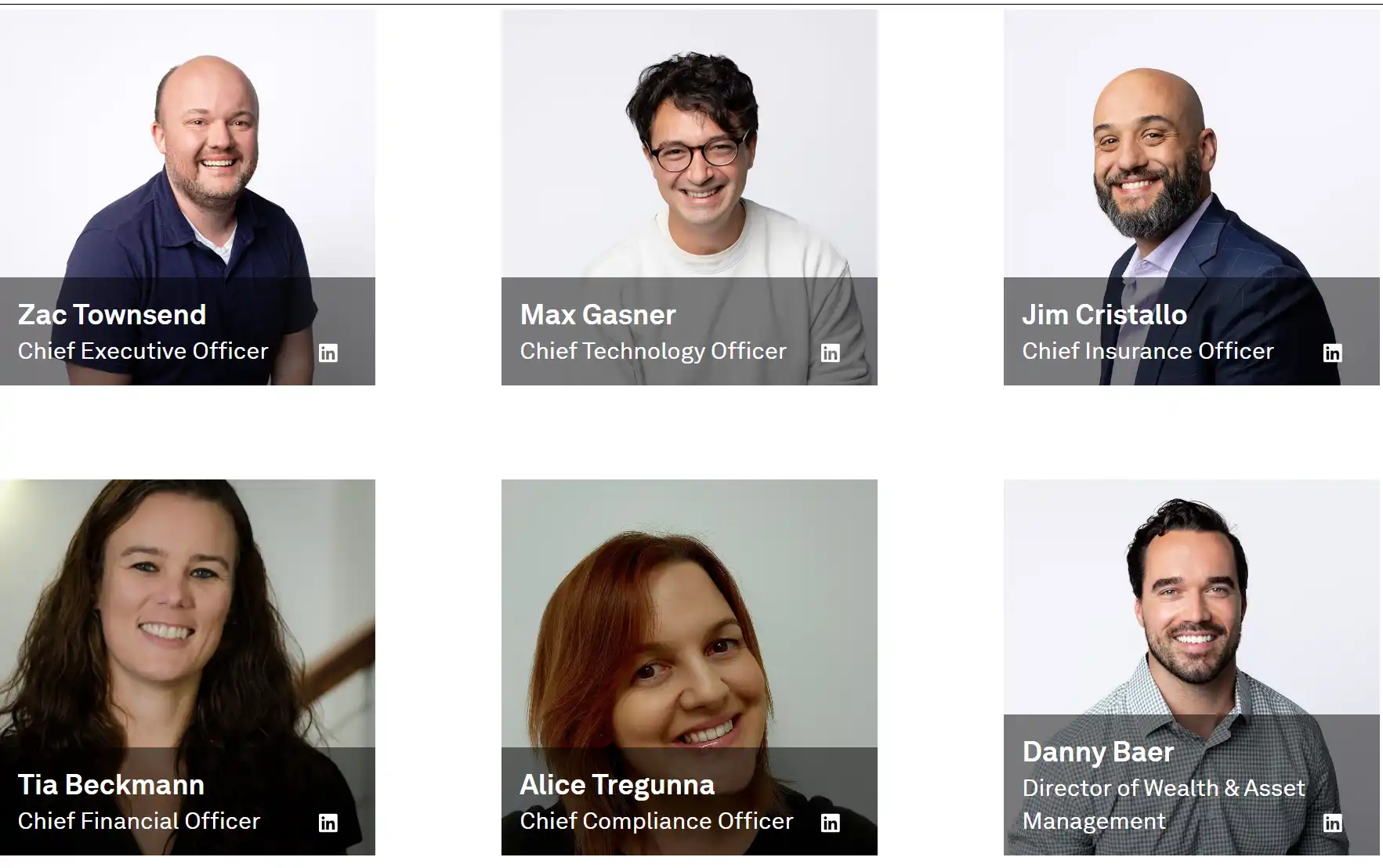
In addition, Meanwhile's board is also not simple, with support from traditional financial giants such as Santander Bank, MS&AD Insurance Group, and others. They have based the company in Bermuda, where 70% of its GDP comes from the insurance and reinsurance industry, earning it the nickname "Global Insurance Capital."
The story of Meanwhile started brewing in 2022, when the product direction and business model were established. By 2023, after a whole year of product development, they tackled the three major issues of compliance, risk control, and regulation. Finally, in early 2024, they obtained a commercial operating license and officially launched their policies in the market.
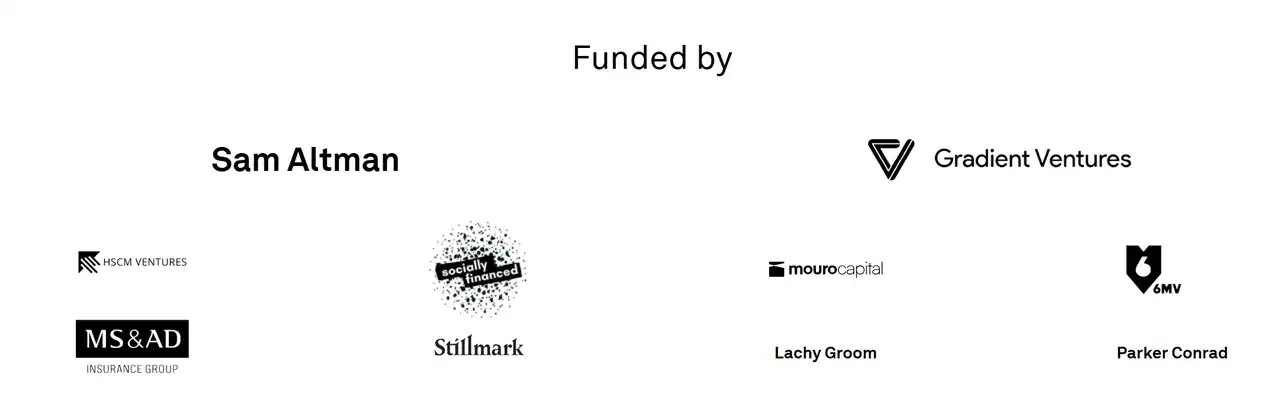
Meanwhile has already completed its seed funding, with the first round led by Sam Altman and former Stripe Issuing head Lachy Groom. The second round was led by Gradient Ventures (Google's AI fund, which has invested in the largest U.S. life insurance company, Northwestern Mutual).
In April 2025, they completed a $40 million Series A funding round, led by Framework Ventures and Fulgur Ventures, with individual investors such as Wences Casares participating, valuing the company at $190 million. Framework Ventures has a strong presence in DeFi and Web3 infrastructure, having previously invested in projects like Chainlink and Aave, while Fulgur Ventures focuses more on the Bitcoin ecosystem and has invested in Lightning Network related technologies.
Bitcoin Players' "Ultimate Belief Card"
This life insurance policy, priced in BTC, offers lifelong coverage with one-time or installment payments. Even if you only pay for one installment, the policy remains effective, and subsequent premiums are directly deducted from the claim amount, making the process more user-friendly than Alipay's. The entire process is carried out within the BTC ecosystem, requiring only a Bitcoin wallet, such as Ledger or Trezor, accessible through the Meanwhile website or app.
No bank account is needed, and the cumbersome process of credit cards is bypassed. Payments are made through the Lightning Network or Taproot, offering speed, cost-efficiency, and gas savings, unlike on-chain transactions that can get stuck for half an hour and cost tens of dollars.
One of the most attractive features is that you can access liquidity without selling BTC. If you live long enough, you can collateralize your policy to borrow BTC after 2 years, up to 90% of the value, at an annual interest rate of only 3%, with no need for repayments—deducted automatically during claims settlement, saving you even the trouble of remembering repayment dates. Compared to the prevalent 14% interest rate on BTC loans in the market, this is perhaps a real benefit.
This operation does not count as selling coins and triggering capital gains tax, allowing you to continue enjoying the appreciation of Bitcoin. The compensation amount is also based on BTC valuation, so you don't have to worry about USD inflation shrinking your claim payout to a few packs of instant noodles years down the line.
Meanwhile, there is a trust-building mechanism in place. If the returns do not meet the promise, users can redeem their investment. The platform offers one-on-one communication service to make you feel valued, and the entire system is transparent, traceable on-chain.
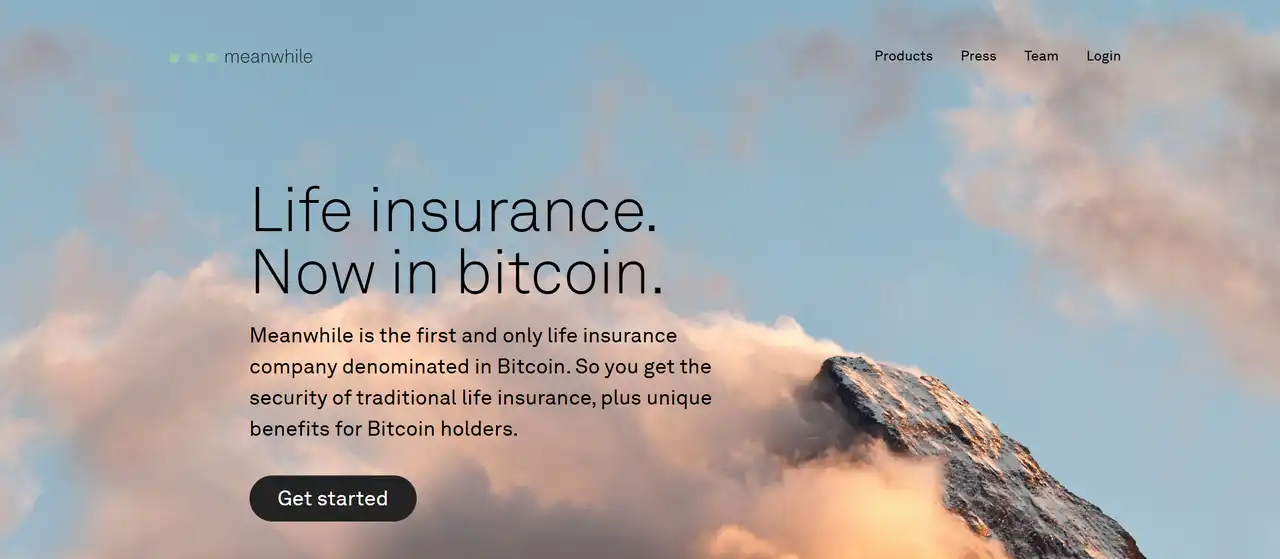
The product has already launched, and users can directly register on the Meanwhile platform, submit health data, have actuaries assess and determine the premium amount. You only need a Bitcoin wallet to make the payment, and upon the demise of the insured, the beneficiary provides identity information to receive the BTC payout directly into a designated wallet.
Is It Truly Sweet or a False Proposition?
Meanwhile's Bitcoin life insurance product fills a gap in the crypto market, especially in wealth inheritance and tax optimization. As Bitcoin's institutional adoption (such as ETFs, pension fund allocations) continues to progress, the demand for financial services tailored to high-net-worth crypto holders will rapidly grow. If Meanwhile can continue to excel in user experience, compliance, and market promotion, it has the potential to become a leader in the crypto insurance space.
Although Meanwhile currently has strong backers, with the change in tariff policies under the Trump administration, the project needs to pay attention to some potential risks. For example, is the current customer structure unclear, with a focus on institutions, or is the retail customer share larger? If Bitcoin experiences a significant drop and returns are lower than expected, how will they handle large-scale redemptions? Faced with these challenges, Meanwhile needs to devise flexible strategies and closely monitor market trends and policy changes to ensure the project's long-term sustainability.
You may also like

Japan’s Three Megabanks Plan Joint Stablecoin Issuance in Fiscal 2026
MUFG, SMBC, and Mizuho reportedly plan to jointly issue fiat-pegged stablecoins in fiscal 2026, signaling Japan’s growing push into bank-led digital payment infrastructure.

Humanity Discloses H Token Dual-Chain Attack Details, With Losses on Ethereum and BSC Exceeding $36 Million
Humanity said the H token attack across Ethereum and BSC caused more than $36 million in losses after leaked ProxyAdmin keys enabled malicious contract upgrades and token minting.

White House Discusses CLARITY Act With Law Enforcement Ahead of Senate Vote
The White House discussed the CLARITY Act with law enforcement ahead of a Senate vote, focusing on illicit finance risks and developer protections.

$75 billion in foreign capital has fled, and South Korean retail investors have absorbed it all using leverage

Bitcoin Trading Guide 2026: Strategies for Experienced Traders

What Is XAUT and PAXG? Why Tokenized Gold Is Booming in 2026

Cryptocurrency CEXs are flocking to sell US stocks, and traditional brokerages are facing an "uninvited guest."

Will the SpaceX IPO Hurt Bitcoin? Here's What Traders Are Watching
Foreign selling in the South Korean stock market accelerates, with cumulative net sales reportedly reaching $75 billion this year
On June 9, The Kobeissi Letter, citing Goldman Sachs data, reported that global investors are selling South Korean stocks at an unusually rapid pace. In the latest trading session, foreign investors sold about $801 million worth of Kospi constituent stocks again; total foreign outflows last week reached about $10 billion, and the market has been in net foreign selling on nearly every trading day over the past month. According to the data cited in the report, foreign investors have sold about $75 billion worth of South Korean stocks so far this year. Meanwhile, South Korean retail and institutional investors together recorded roughly $69 billion in net buying over the same period, suggesting that the market’s main buying support has come from domestic capital rather than returning overseas funds. The information currently disclosed still mainly comes from The Kobeissi Letter’s retelling and Goldman Sachs data summaries, while public details on the statistical period and the specific definition of “selling” remain relatively limited.

Fortune Warns of Strategy’s Financing Structure Risks as Bitcoin Premium Narrows
Fortune warned that Strategy’s Bitcoin treasury model faces growing financing risks as MSTR’s net asset premium narrows and preferred stock dividend pressure increases.

Ferrari Challenge Le Mans: Carl Moon to Dominate in WEEX Livery

Sahara AI Responds to SAHARA’s Sharp Drop: No Contract or Product Security Issues Found, Internal Investigation Underway
Sahara AI responded to SAHARA’s 60% price drop, saying no token contract or product security issues have been found and an internal investigation is underway.

WEEX Deposit/Withdrawal Dynamic Island: Your Asset Status, Always in Sight
Scaling Crypto Derivatives: The Digital Asset Infrastructure Behind High-Volume Trading
In the fast-moving digital asset ecosystem, derivatives platforms face an extreme architectural test. High-leverage futures markets demand more than just standard security—they require absolute operational precision, zero-latency matching engines, and ironclad structural scalability, all while navigating intense market volatility.
As global platforms scale to meet these demands, the industry is shifting away from rigid, monolithic setups toward a more agile, "decoupled" infrastructure philosophy.
The Blueprint for High-Volume Copy TradingFor elite global exchanges like WEEX (founded in 2018), this architectural choice becomes critical when scaling high-volume retail features like social copy trading. When thousands of users automatically mirror the real-time strategies of elite traders simultaneously, it triggers sudden, monumental spikes in concurrent transactional volume.
To prevent execution latency or settlement bottlenecks during these peak volatility events, a platform's primary engine must remain entirely dedicated to risk management, copy-trade synchronization, and order matching.
The Architectural Rule: New-generation platforms must separate front-end user execution engines from heavy backend infrastructural overhead to eliminate operational friction.
By separating these layers, platforms can maintain complete sovereignty over their trading environments and user experiences while strategically aligning with institutional-grade infrastructure ecosystems. This strategic framework allows modern exchanges to leverage advanced Digital Asset Custody infrastructure such as Cobo’s behind the scenes, ensuring that backend wallet management scales elastically alongside trading spikes.
Capitalizing on Market Momentum and 400× LeverageIn a derivatives arena where platforms offer up to 400× leverage on perpetual contracts, capital efficiency and market agility are core business metrics. To capture market momentum, an exchange needs the ability to rapidly expand its asset offerings, supporting everything from legacy crypto assets to sudden, trending altcoins across a massive library of trading pairs.
Adopting a flexible, scalable Wallet-as-a-Service (WaaS) solution such as Cobo’s could completely rewrite the development timeline for high-growth exchanges. Instead of spending months of engineering capital building out custom backend wallet architectures for every new blockchain network, platforms can deploy localized infrastructure in days.
This agility allows platforms to instantly scale their listings to over a thousand trading pairs without compromising security or delaying time-to-market. It mirrors the exact operational advantages seen during high-velocity market events, similar to how advanced wallet infrastructure empowers platforms during sudden asset surges; allowing exchanges to pass that speed and liquidity directly to their global user base.
A Mature Foundation for GrowthThe synergy between trusted infrastructure ecosystems and global trading platforms represents the natural evolution of a maturing crypto market. As WEEX continues to scale its global spot and derivatives offerings for over 6 million users, adopting robust backend paradigms proves that platforms no longer have to compromise between cutting-edge trading velocity and uncompromised structural security.

Morning Report | BitMine increased its holdings by 126,971 ETH last week; trader Eugene announced his exit from the crypto market

Wang Chuan: How can one not feel anxious after the neighbor Old Wang made thirty times profit by investing in storage stocks? (Seven) - A quarter-century cycle

Get Paid to Onboard? Try WEEX’s New Homepage with Rewards for Registration, Deposit & Trade
WEEX Custom Layout: Build Your Perfect Trading Workspace in Seconds
Japan’s Three Megabanks Plan Joint Stablecoin Issuance in Fiscal 2026
MUFG, SMBC, and Mizuho reportedly plan to jointly issue fiat-pegged stablecoins in fiscal 2026, signaling Japan’s growing push into bank-led digital payment infrastructure.
Humanity Discloses H Token Dual-Chain Attack Details, With Losses on Ethereum and BSC Exceeding $36 Million
Humanity said the H token attack across Ethereum and BSC caused more than $36 million in losses after leaked ProxyAdmin keys enabled malicious contract upgrades and token minting.
White House Discusses CLARITY Act With Law Enforcement Ahead of Senate Vote
The White House discussed the CLARITY Act with law enforcement ahead of a Senate vote, focusing on illicit finance risks and developer protections.
$75 billion in foreign capital has fled, and South Korean retail investors have absorbed it all using leverage
Bitcoin Trading Guide 2026: Strategies for Experienced Traders
What Is XAUT and PAXG? Why Tokenized Gold Is Booming in 2026


